
by April Fan
At present, the rapid evolution of artificial intelligence (AI) is profoundly reshaping various sectors of society, from healthcare and education to transportation and finance. As AI applications become increasingly widespread, ethical and regulatory concerns have come to the forefront.
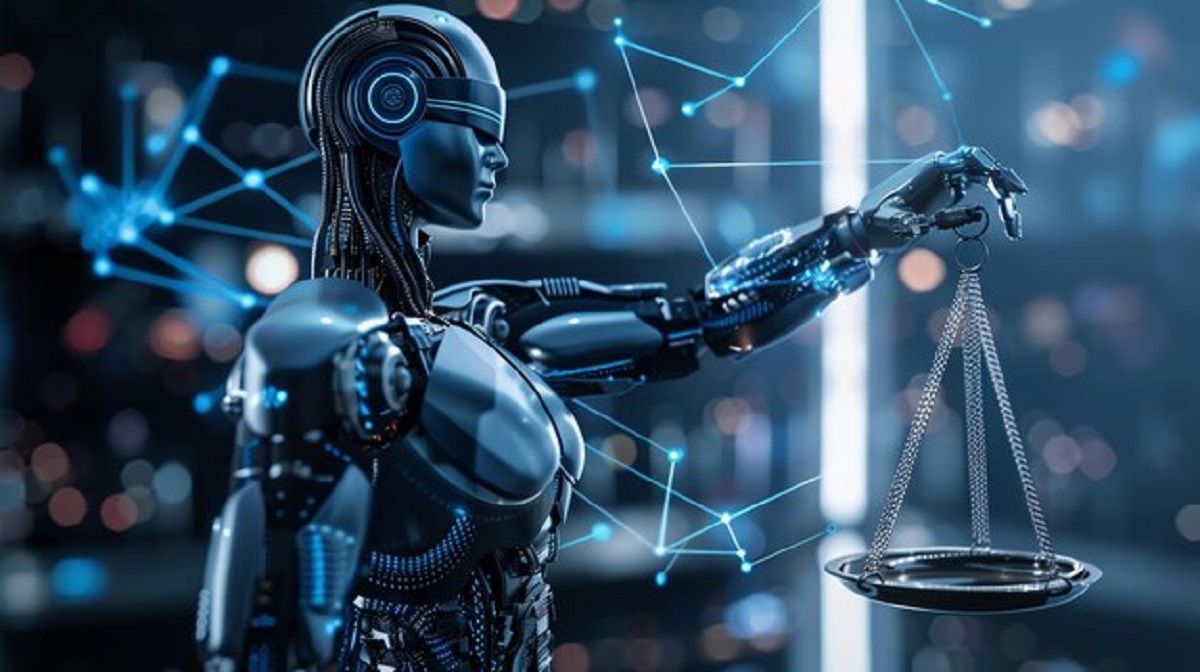
Issues such as data security breaches, algorithmic bias, and unclear accountability have sparked public debate and posed significant challenges to social fairness and justice. Consequently, the establishment of a scientific and well-structured ethical and regulatory framework for AI has become an urgent priority.
Recently, during the ongoing National Two Sessions, AI has emerged as a key topic of discussion. The government work report mentioned "artificial intelligence" three times and, for the first time, introduced the "AI+" initiative.
Understanding the Two Sessions
The "Two Sessions" refer to the National People's Congress (NPC) and the Chinese People's Political Consultative Conference (CPPCC), two of the most significant political events in China, held annually in March. During these sessions, the NPC reviews and deliberates on the government work report and legislative proposals, while CPPCC members offer insights and recommendations on critical national issues, reflecting public concerns. Through these discussions, key economic and social development objectives are determined, and major policies are set in motion.
Key AI Proposals at the Two Sessions
During this year’s Two Sessions, several CPPCC members put forward proposals focusing on AI safety and governance:
· Advancing AI R&D and Reducing Foreign Dependence
Some representatives advocated for the creation of a dedicated national fund to support research and development in key "bottleneck" areas, including AI chips, algorithmic frameworks, and large-scale models. Such efforts aim to bolster domestic innovation and decrease reliance on foreign technologies.
· Ensuring AI Security and Ethical Development
Li Dongsheng, founder of TCL and an NPC representative, emphasized the need for stricter regulations on deep-synthesized AI content to maintain technological consistency and security. Zhou Hongyi, founder of 360 Group and a CPPCC member, introduced the concept of a "model-based security model," advocating for the deployment of large-scale security models to mitigate AI-related risks.
· AI and Industrial Integration
Lei Jun, founder, chairman, and CEO of Xiaomi Group, submitted five proposals centered on the high-quality development of AI and the new energy vehicle sector. These included accelerating the mass production of autonomous driving technology and strengthening regulations against AI-driven fraud, such as deepfake manipulations of voice and facial data.
AI’s influence is also transforming traditional industries. Several representatives called for deeper integration of AI in manufacturing, healthcare, and agriculture, urging the government to support industry-wide digital transformation. Zhou Hongyi, for instance, proposed the establishment of an "AI factory" to expedite the intelligent upgrade of traditional sectors. Meanwhile, Liu Qingfeng, chairman of iFLYTEK, addressed AI’s impact on employment and education, suggesting the introduction of AI unemployment insurance to mitigate workforce disruptions caused by automation.
To meet the demands of an AI-driven economy, some representatives advocated for educational reforms, including the introduction of interdisciplinary AI programs in universities, stronger foundational training in mathematics and logic, and enhanced collaboration between academic institutions and enterprises to nurture AI-specialized talent.
Additionally, multiple proposals underscored the urgency of AI legislation, calling for clear regulations on data privacy, algorithmic transparency, and liability attribution to prevent technological abuse and mitigate ethical risks. Some members also suggested the creation of a national AI safety assessment platform to dynamically monitor and regulate generative AI, including deepfake technology, ensuring content security and controllability.
These discussions illustrate that AI is not only a focal point for technological advancement but also a critical area requiring comprehensive governance at the policy level.
Entrepreneurs and policymakers from various industries have offered a broad spectrum of proposals aimed at both harnessing and regulating AI. As these suggestions are refined and incorporated into government work reports, the roadmap for AI-driven transformation across industries is becoming increasingly clear.
Ultimately, the "AI+" initiative signifies not only the Chinese government’s commitment to fostering AI as a core pillar of technological innovation but also a strategic framework for the nation’s future economic and social development. As this initiative gains momentum, AI is expected to serve as a powerful catalyst, driving substantial productivity growth across multiple industries.