

by Eileen Hui
Today’s story begins with a real trademark non-use cancellation case.
Company A owns two registered trademarks (referred to as "Trademark 1" and "Trademark 2" for clarity). They share the same character text, but differ in graphic design and font style as shown below:
TM 1:

TM 2:

Competitor B filed a NUC application (3-year non-use cancellation) against "Trademark 1."
According to the court judgment, Company A submitted usage evidence displaying the mark
Here comes the question: Does this evidence count as valid use of Trademark 1?
The high-court’s answer was clear: NO!
The court found that despite identical textual elements, the font design is different. The font and visual design used in practice more closely resembled Trademark 2. Therefore, the submitted use evidence was not deemed valid for Trademark 1. As a result, Trademark 1 was cancelled due to non-use.
Isn't this outcome somewhat unexpected?
Conventionally, we believe that actual use of a trademark differing only in non-distinctive features (e.g., minor adjustments to font or color) from the registered version constitutes valid use. However, under a multi-trademark strategy, this "common sense" faces a significant challenge.
Judicial Standards in Non-Use Cancellation Cases
The purpose of this provision is to clear out trademarks that the right holder has no intention of using or have not been used for a long time, in order to effectively release trademark resources.
For registered trademarks, it is the duty of the trademark right holder to use them commercially within the scope of the approved registration (registered trademarks and approved goods).
Similar rules exist in most trademark systems globally, with a non-use period ranging from 3 to 5 years.
However, trademark registration is a relatively static process, while actual use will be adjusted according to commercial needs as the business environment changes. The ultimate value of a trademark is to serve commercial needs and create commercial value for the right holder.
Therefore, relevant judicial interpretations clarify that if the actual trademark used has minor differences but does not change the distinctive features of the registered trademark, it can be regarded as valid use.
Based on this, the use of a mark like
would typically be considered valid use for a registered mark like
However, the examination guideline issued by the Beijing High People's Court states:
If the registrant of the disputed trademark owns multiple registered trademarks, although there are only minor differences between the actual trademark used and the disputed trademark, but if it can be confirmed that the use is targeted at other registered trademarks of the registrant, the claim to maintain the registration of the disputed trademark may not be supported.
This important rule deserves to be read several times, since it dictated the outcome of the real-case above.
This provision has begun to have a profound impact on the trademark layout of enterprises in practice. For companies with defensive trademark needs, if they do not make adaptive adjustments, the competitor only need to slightly press the "NUC" start button, it will potentially cause your trademark fortress to crumble from within.
The Double-Edged Sword of Multi-Mark Strategy
To fend off squatters or free riders, many companies adopt a “defensive trademark registration” strategy registering multiple similar marks around the core brand. This creates a “protective wall” that discourages infringement.
This seemingly wasteful behavior has played a good protective role in the current fierce market competition. Without this "fence", there may be a large number of "hitchhiking" trademarks on the market. Even if they can be solved through opposition / invalidation procedures, the cost is much higher than defensive registration and not all opposition/invalidation would be favorable.
Hereinafter are some trademarks approved by CNIPA. Please note their applicants are not the well-known companies you are familiar with.
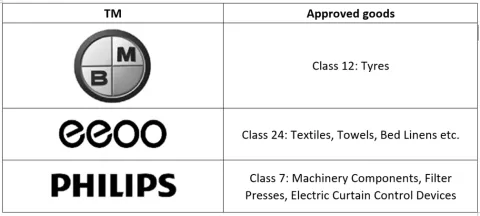
Yet, the judicial examination renders the other edge of this sword extremely sharp. According to the 2023 annual report of the Beijing Intellectual Property Court, in trademark NUC review cases, the proportion of defeats caused by "actual use pointing to other registered trademarks" is as high as 37.6%. This data reveals a cruel reality: the well-constructed trademark fortress has become one of the prime targets for competitors to launch NUC attacks.
Brand evolution (e.g., logo updates, font refinements) is a commercial necessity. Companies typically register new marks when launching updated branding. Herein lies the risk: If only the new mark is used, older marks may face NUC because the use evidence is "directed at" the newer registration.
Take Apple as an example.
Its early registered and used trademark was the logo


.
The goodwill of a brand is continuous, and every brand has its own brand culture and a history of brand inheritance, which is a very valuable asset for the brand and should be protected by public power.
However, based on the above examination rule, if NUC was filed against apple and it can only provide use evidence on the new apple
This isn’t just Apple’s problem: it's a systemic risk for any company engaged in large-scale trademark portfolio management. Your registered trademarks may become each other's "gravediggers" because of the active use of the "brother" trademarks. Therefore, proactively adapting to official scrutiny and implementing dynamic portfolio management is imperative.
Building a Safe Trademark Management System
If you use a “trademark fortress” strategy, it’s time to evolve. Here’s how to future-proof your trademark assets:
1. Implement a tiered management system for registered trademarks: Classify trademarks based on their importance (core trademarks, important defensive trademarks, general defensive trademarks, etc.), and set different management requirements and maintenance strategies.
2. Develop a retention plan for defensive trademarks: Define the duration and usage plans for defensive trademarks. For trademarks that have been updated, it is essential to retain evidence of the coexistence of old and new trademarks during the transition period.
3. Establish cross-departmental collaboration for usage standards: The marketing, sales, legal, and design departments should work together to develop and enforce strict trademark usage standards. The core objective is to purposefully link usage evidence with specific registered trademarks and to systematically and effectively retain such evidence.
4. Conduct regular checking and cleanups: Regularly checking the registration and usage of trademarks, and promptly abandon or cancel trademarks that are idle, have no defensive value, or have become ineffective to prevent them from becoming targets for NUC.
5. Enhance internal training and awareness: Ensure that employees in relevant departments understand the legal risks of deforming, misusing, or mixing different registered trademarks. Consistency matters! it could be the difference between preserving or losing a mark.
Some IP professionals have suggested establishing a “family of marks” doctrine allowing companies to prove continuity of brand reputation across similar marks, while moderately relax the evidence standards of use for individual trademarks based on proof of the same goodwill.
However, under the current rule, we have no choice but to promptly adjust our strategies and safeguard our brands accordingly.
In conclusion: Beware the "Maginot Line's" Self-Destruct Mechanism.
When companies build a "Maginot Line" of trademark protection for their brands, they must be vigilant about the "self-destruct" mechanism hidden within their defenses — specifically, the risk that multiple similar registered trademarks, due to unclear usage evidence, may become each other's "gravediggers."
Always be vigilant: No defense is truly invincible.
When you feel safest behind your trademark wall may be exactly when your adversary is preparing to press the button that triggers collapse — from within.
Do you still have doubts about any of the following issues? Feel free to leave a comment and let us know which topics you’d like us to cover next:
1. Risk of Madrid Trademarks in China: Missed non-use cancellation notices from CNIPA can lead to the cancellation of the trademark. What’s the solution?
2. Effectiveness of Overseas Evidence: Are foreign usage documents valid in China’s “non-use” proceedings?
3. Use by Agents: If the use in China is conducted by an agent on behalf of the trademark owner, does that count as valid use?
4. Last-Minute Remedies: After a trademark is subject to a NUC application, is it too late to submit a new application as a remedy?
5. Scope of Goods/Services for Use Evidence: Is it necessary to provide use evidence for every single good/service item specified in the registered trademark?
Photo by Giu Vicente on Unsplash