

By Eileen Hui
In the latest edition of the Similar Goods and Services Classification, CNIPA added a new "room" under Class 14 (Jewelry, Clocks, and Watches), Room No. 1405. Currently, this room contains only one item: "pet jewelry."
It may sound like a minor detail, but failing to secure protection here could cost significant time and resources later.
1. The Pet Economy: A Growing Market with Legal Implications
China’s pet economy is growing at a double-digit rate. Pets are increasingly regarded as family members, sometimes even more cherished than human ones.
The pet product market continues to expand, covering everything from basic food and toys to apparel, accessories, and now, jewelry, reflecting a trend toward diversification and premiumization.
Globally, luxury pet products have become a symbol of lifestyle. Items like diamond-encrusted collars, designer pet carriers, and custom pendants not only meet owners’ demands for quality but also reflect the deepening emotional bond between humans and their pets.
As the market grows and new sub-class emerge, the importance of trademark protection becomes increasingly clear. Companies that fail to register their trademarks in these new segments may face several challenges.
Gaps in Brand Protection: Competitors may register identical or similar trademarks in subclass 1405 for pet jewelry products, diluting the uniqueness and distinctiveness of the original brand in the market.
Consumer Confusion: If multiple pet jewelry products with similar trademarks appear on the market, consumers may mistakenly associate them with the original brand, damaging its reputation and market positioning.
High Costs of Enforcement: If another party registers a similar mark, the brand owner may need to initiate opposition, invalidation, or litigation proceedings, processes that demand considerable time, effort, and financial resources.
Consider this example:
Brands focusing on pet products (e.g., collars, clothing) typically register trademarks in Class 18 (Animal Supplies). But stopping there is a recipe for hidden risks.
Take this Coach pet collar, priced at ¥1,979: I wouldn't even splurge that much on myself! The brand certainly has a registered trademark in Class 18 for animal supplies, so selling the collar is legally sound.
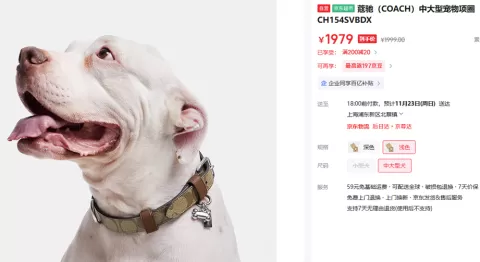
But think further: is this merely a "collar"? Doesn't it also qualify as a "jewelry piece"? If this doesn't convince you, what about this Prada's diamond-encrusted collar priced at ¥4,480?
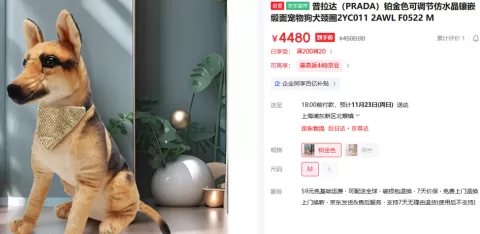
If a competitor registers trademarks like "PRADA" or "COACH" in Class 1405 for "pet jewelry" and sells similar products under the name "pet jewelry," how much effort and cost would take the true brand owner to defend their rights?
Only brand owner that have endured such hardships truly understand this pain.
While future adjustments to laws and regulations are possible, as market entities, our best course of action is to fully leverage existing rules within the current legal framework to build a defensive barrier and minimize potential harm. Covering relevant product sub-classes is the most basic and cost-effective protection method.
2. Well-Known Brands: Extra Caution Required
Sub-class 1405 is likely to become a "new playground" for malicious trademark squatting. A proactive defensive registration might be the solution: act early, rest easy.
Every time the CNIPA adds a new sub-class, it will trigger a wave of squatting registrations. Sub-class 1405 will be no exception. Hurry and check: has your brand been secretly registered in this sub-class? Should it be added to your future monitoring list?
A moat requires regular maintenance and updates, and trademark layout must keep pace with changes to the classification system.
3. A Quick Guide: What Are "1405" and "Sub-classes"?
Are you curious or confused about the "1405" and "sub-class" we keep mentioning? Sub-classes are core rules of China's trademark classification system and the "underlying logic" for building our trademark defense system.
Although China's goods classification is derived from the Nice classification, to more accurately examine whether goods are similar, the CNIPA, based on years of experience, further divided the goods in each class into several "sub-classes".
Here's a simple analogy: Class 14 (Jewelry, Watches, and Clocks) is like a building. Inside this building are different "rooms": 1401 (Precious Metal Raw Materials), 1402 (Jewelry Boxes), 1403 (Jewelry for Humans), 1404 (Watches and Clocks), and our focus, 1405, a new room named "Pet Jewelry."

The key "rule of the game" is: Within the "building" of Class 14, goods in the same "room" (sub-class) are deemed similar; goods in different "rooms" (sub-classes) are generally not considered similar.
What does this mean?
Imagine: Company A registers a trademark for "jewelry" in Room 1403, and Company B registers the same or similar trademark for "pet jewelry" in Room 1405. Even though both trademarks are in the "building" of Class 14, they can coexist peacefully and both be registered because they belong to different "rooms".
This is precisely why a comprehensive trademark defense cannot be limited to the subclass you currently use. We also need to consider whether registrations in other "rooms" could pose a risk to your brand.
Pet jewelry represents a new trademark battleground. For brands that wish to safeguard their image and secure long-term protection, acting early is essential.
Cover photo Getty Images for Unsplash+