
By Joy Dong
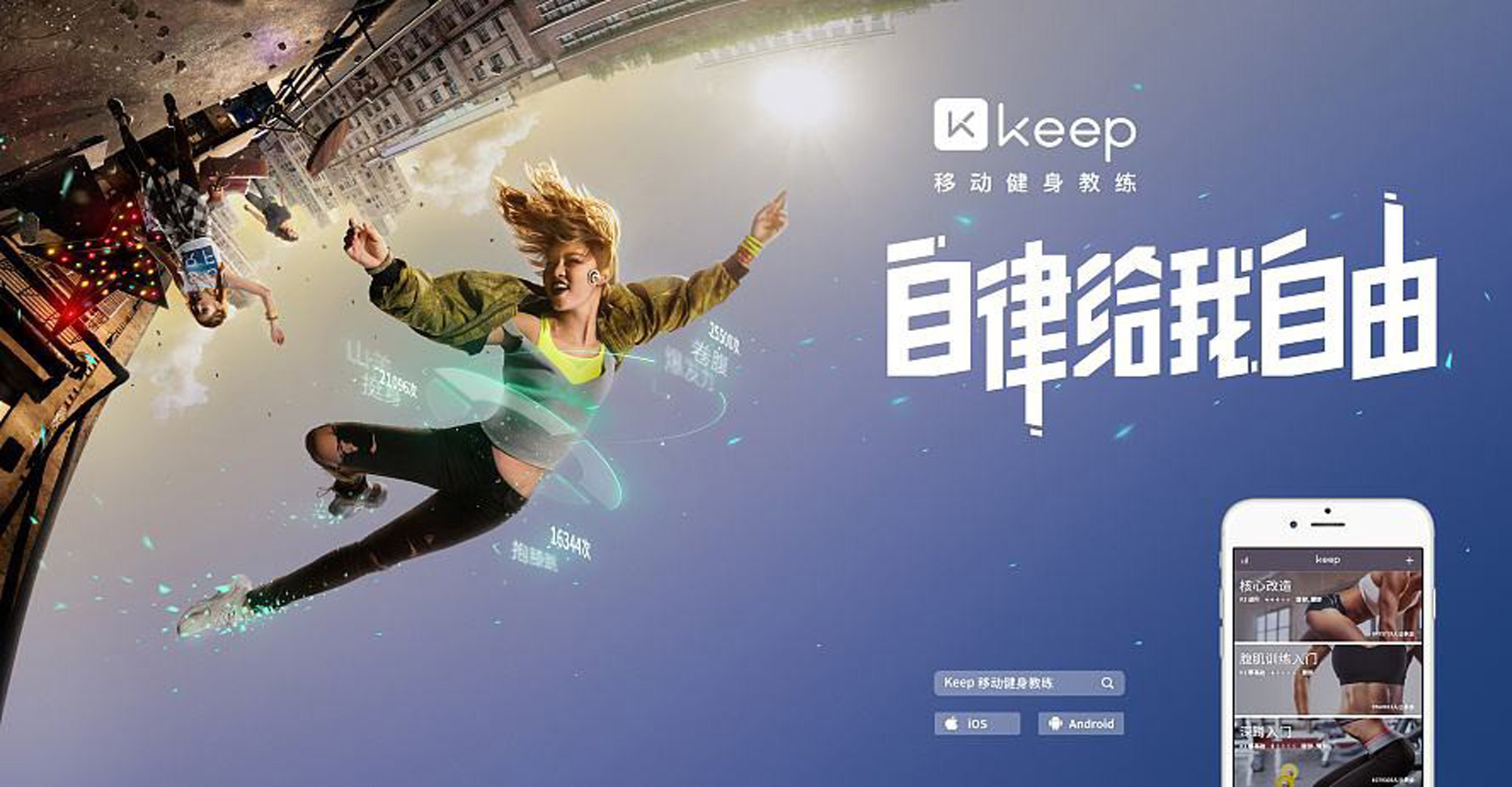
You might have Keep on your phone for workouts and tracking, embracing its motto "Self-discipline Brings Freedom." But have you ever wondered: if you shopped for sportswear online and saw pages of items branded "KEEPONGOING," would you assume it's official merchandise from that popular fitness app?
Part 1: An "Omnipresent" Copycat Operation
First, let's examine how the "copycats" operated. Their strategy was a precise, "full-platform, high-imitation" playbook.
Full Platform Coverage: These three affiliated companies set up shops on all three major e-commerce platforms: Taobao, JD.com, and Douyin Mall. No matter where you searched for sportswear, you could encounter them.
Name Association: Their shop names all contained the phrase "KEEPONGOING." More crucially, every single product listing title in their stores began with "KEEPONGOING." This ensured the phrase constantly grabbed shoppers' attention.
Deceptive Details: Through notarized purchases, the plaintiff found that the tags and qualification certificates on the clothing all bore the "KEEPONGOING" logo. A telling detail was that within this logo, "KEEP" and "ONGOING" were in different colors. This typographic choice intentionally made the core element "KEEP" visually prominent.
Evidence of Bad Faith: One defendant (Shuhong Company) had tried to "legitimize" its use by applying to register the "KEEPONGOING" trademark in Class 25 for "clothing." However, the China National Intellectual Property Administration rejected the application, citing its similarity to prior well-known trademarks. Despite this rejection, they continued using it. This action became key evidence for the court to determine their subjective malicious intent.
In short, for an average consumer browsing these products on major platforms, it was easy to wonder: Is this sportswear from the Keep fitness app? This consumer confusion was the starting point of the court's ruling.
Part 2: The Law's "Magnifying Glass" and "Protective Umbrella": How Could Keep, Which Doesn't Sell Clothes, Win?
Keep's core business is online fitness services, with its main trademark registered in Class 41 (education & fitness). The defendants sold goods in Class 25 (clothing & footwear). Normally, one might think software and shirts don't compete. So, how did Keep prevail?
The court's verdict provided a clear answer, applying two key legal principles.
The First Magnifying Glass: Well-Known Trademark Recognition — Super Protection for a "Transcendent" Brand
This was the cornerstone of the case. On what basis did the court recognize "Keep" as a "well-known" trademark deserving cross-class protection? The answer lay in the voluminous evidence submitted by Keep:
Massive Market Penetration: The Keep mobile app had been downloaded hundreds of millions of times from various app stores and consistently ranked at the top among fitness apps, meaning it was integrated into the daily lives of a vast user base.
Extensive Brand Recognition: Its official accounts on Weibo, Douyin, and other platforms boasted massive followings and engagement. The company had enlisted celebrities like Zou Shiming and Li Xian for endorsements and saturated online and offline channels with the "Keep" logo and its "Self-discipline Brings Freedom" slogan through TV show placements, event sponsorships, and outdoor advertising.
Substantial Sustained Investment: All the above promotion represented significant long-term financial investment, which ultimately translated into exceptionally high brand awareness and goodwill.
Based on this, the court found that at the time of the infringement, the "Keep" trademark had become widely known to the relevant public nationwide for "fitness instruction services" and had acquired the status of a well-known trademark in the legal sense. It's akin to a celebrity whose influence transcends their original field, making their name itself a protectable brand asset.
Once recognized as well-known, a trademark's protection expands beyond its original registered class ("fitness classes"). It can transcend categories to prevent others from "free-riding" on its reputation in any goods or services likely to cause association or damage.
The Second Protective Umbrella: Association Confusion and Malicious Free-Riding
After establishing "Keep" as well-known, the court examined the defendants' actions. Fitness apps and sportswear are closely related in usage scenarios, target demographics, and consumer habits. People who love using Keep are the core consumers for sportswear.
The court noted that the defendants' use of "KEEPONGOING" fully incorporated the core element "Keep," and the color contrast deliberately highlighted "KEEP," constituting clear imitation. This was likely to cause consumers to mistakenly believe the clothing was officially produced, co-branded, or authorized by Keep. This kind of "mistaken association" confusion unfairly capitalized on the market reputation Keep had built over time, constituting trademark infringement.
Regarding Keep's additional claim that the defendants' use of the slogan "Self-discipline Brings Freedom" constituted unfair competition, the court did not support it.
The reason was straightforward: this phrase had long existed in philosophical discussions and online contexts and was used very widely. The evidence was insufficient to prove it had established a unique and stable connection with Keep Company. This reminds all businesses: for a slogan to gain exclusive legal protection, it must possess sufficient distinctiveness and identifiability.
Part 3: How Was the 500,000 RMB Damages Figure Calculated?
The plaintiff won, but was the 500,000 RMB award arbitrary? Not at all. When precise calculation of the plaintiff's loss or the defendant's profit is impossible, the court comprehensively considers the circumstances to "determine compensation at its discretion." In this case, the court mainly weighed the following factors:
The "Keep" trademark possessed high repute and market value.
The defendants demonstrated clear subjective malice: They continued the infringing acts even after their trademark application was explicitly rejected by the CNIPA, indicating willful infringement.
Substantial Scale of Infringement: Based on sales data from the e-commerce platforms, the total sales revenue of the infringing products was nearly 6 million RMB.
Industry Profit Reference: The court considered the general profit margins in the apparel industry, as presented by both parties.
Reasonable Enforcement Costs: This included necessary expenses like attorney's fees and notarization costs incurred during litigation.
It was the comprehensive balancing of these specific factors that led the court to order the three defendants to jointly compensate 500,000 RMB. Although lower than the plaintiff's claim, this calculation demonstrates the judiciary's aim to both penalize infringement and compensate the rights holder.
Conclusion: A 500,000 RMB Masterclass in Brand Strategy
This lawsuit represents far more than a 500,000 RMB award. It serves as a public masterclass:
For Entrepreneurs: It demonstrates the long-term value of brand building. When you build your brand into a "well-known" symbol through product, operations, and marketing, the law becomes your strongest shield, protecting your commercial achievements from erosion.
For Imitators: It sounds a clear warning. In an era of transparent information, any attempt to "free-ride" on another's success will be exposed under meticulous scrutiny and solid evidence, inevitably incurring costs.
For Consumers: It reminds us to be more discerning shoppers. Products that deliberately mimic established brands may create short-term confusion but often fail to match the quality and after-sales service of the genuine article. Supporting originality and choosing authentic products is the wiser choice.
The realm of a brand is expanded by innovation and guarded by the law. Keep's victory protects not just four letters, but the very foundation of fair market competition.