
by Hansen Tao
A patent is intended to reward innovation and give its owner a legal tool to prevent unauthorized use of an invention. But what happens when a patent is acquired not to develop or protect an innovation, but primarily to bring litigation against another company?
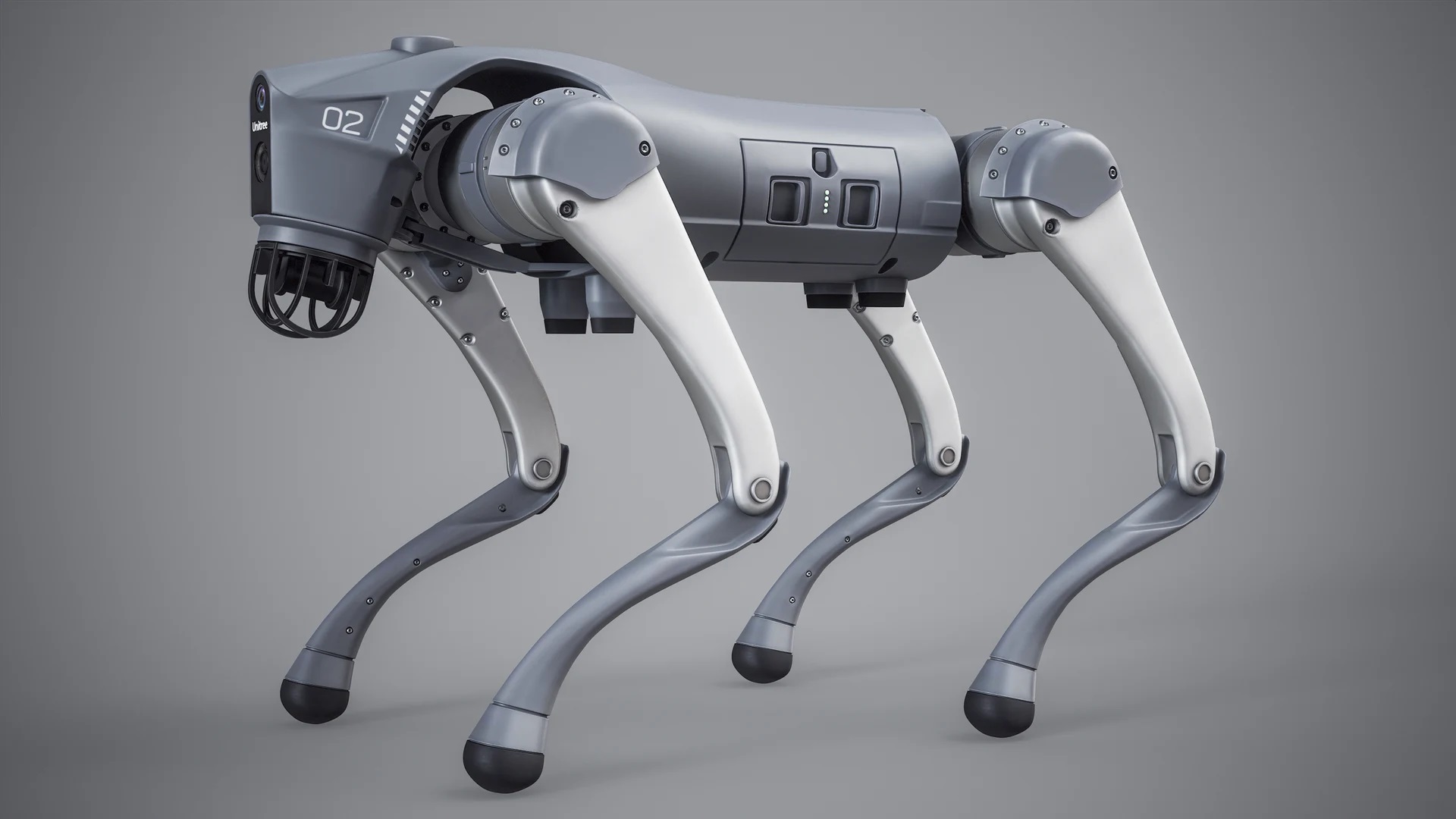
A recent decision by China’s Supreme People’s Court provides an important answer. The case involved two patent infringement lawsuits brought against a Chinese robotics company developing quadruped robots, commonly known as robot dogs.
The Supreme People’s Court ultimately concluded that the defendant's robot dogs did not infringe the patent and, more significantly, that the plaintiff's conduct amounted to malicious litigation. The court ordered the plaintiff to reimburse RMB 80,000 in reasonable expenses incurred by the defendant in defending its rights.
The decision is significant because it illustrates an increasingly important principle: having a valid patent does not automatically make every enforcement action legitimate. Courts may examine not only whether infringement exists, but also how and why litigation is being pursued.
A Patent, Two Lawsuits and a Robot Dog
The dispute arose from a patent titled "Electronic Dog." The defendant, a technology company developing embodied intelligence and quadruped robots, was accused of infringing the patent through two products, known as the Go2 and A2 robot dogs.
The patent owner argued that various components of the robot dogs corresponded to technical features contained in its patent. Among other things, it sought to establish connections between the robots' metal casing, foot-end sensors and LiDAR system and technical elements described in the patent.
The courts, however, found that the accused products did not contain several of the patent's required technical features. In particular, the robot dogs lacked important elements described in the patent, meaning that the products could not satisfy the relevant infringement test.
Once the technical comparison failed, the infringement claims themselves could not stand.
But the case did not end there.
Why the Timing of the Lawsuits Mattered
The plaintiff's conduct before and during the proceedings attracted particular attention from the courts.
What made the circumstances unusual was the combination of several factors. The plaintiff's principal business was unrelated to robotics, it had never actually manufactured or sold products covered by the patent, and it moved extremely quickly from acquiring the patent to initiating litigation.
The plaintiff then brought another lawsuit concerning a different robot dog product while the first case was still pending.
The defendant was also undergoing the process of preparing for an IPO on China's STAR Market. The plaintiff's second lawsuit was filed during this important period and included requests for evidence investigation and preservation.
The court considered the timing and litigation conduct together. It found that the lawsuits could objectively interfere with the defendant's business and listing process and concluded that the plaintiff's purpose went beyond the legitimate protection of patent rights.
This distinction is important. Chinese courts do not regard the mere filing of an unsuccessful lawsuit as malicious litigation. A party is entitled to bring a claim that it genuinely believes has legal and factual grounds, even if the court eventually rejects it.
The issue in this case was the broader pattern of conduct.
The Unusual Compensation Strategy
Another feature of the proceedings concerned the amount of compensation claimed.
In the first lawsuit, the plaintiff initially requested only RMB 500 in damages. At the same time, however, it sought an audit of the defendant's profits and indicated that compensation could ultimately be calculated on the basis of alleged infringement profits, including punitive damages.
The result was a striking difference between the nominal amount stated in the claim and the much larger amount potentially at stake.
During the proceedings, the plaintiff later sought RMB 80 million in compensation before ultimately returning to a claim of RMB 500 shortly after the second-instance hearing.
This matters because litigation itself imposes costs on a defendant. A patent dispute may require lawyers, technical experts, evidence preservation, document production and management time. For a company preparing for an IPO, the consequences can be even more significant.
A lawsuit therefore has the potential to create commercial pressure even before the court determines whether infringement has occurred.
What Is "Malicious Litigation" in China?
The concept of malicious litigation is particularly relevant to understanding the judgment.
The Chinese legal system protects the right to bring civil proceedings. At the same time, parties are expected to exercise that right in accordance with the principles of good faith and legitimate use of judicial procedures.
In this case, the Supreme People's Court looked at the circumstances as a whole.
The plaintiff did possess patent rights, so the case was not simply one of a person inventing a completely fictitious legal claim. However, the court found significant problems with the factual basis of the infringement allegations. The accused products did not contain key technical features of the patent.
The plaintiff's conduct also displayed repeated changes in its compensation demands and litigation strategy. Most importantly, the proceedings were brought at a particularly sensitive stage of the defendant's IPO preparations.
Taken together, these circumstances persuaded the court that the litigation was not simply an attempt to stop genuine patent infringement.
The Supreme People's Court ultimately characterized the conduct as using "rights protection" as a means to commit infringement against another party's legitimate interests.
Why This Case Matters for International Companies
For international businesses, the case offers several practical lessons.
First, acquiring a patent in China can provide genuine enforcement rights, but those rights must be exercised responsibly. A patent portfolio should not be viewed simply as a collection of potential lawsuits. Courts may look at the surrounding circumstances when assessing whether enforcement activity is legitimate.
Second, patent infringement analysis remains fundamentally technical. A company considering enforcement should conduct a careful claim charting exercise before commencing litigation. It is not enough to identify similar product functions or components. The relevant technical features must be present in the accused product in accordance with the applicable infringement standard.
Third, litigation strategy matters. Inconsistent compensation claims, aggressive procedural applications and unexplained changes in litigation positions may become relevant when a court assesses the legitimacy of the proceedings.
Fourth, timing can matter when litigation has consequences beyond the patent dispute itself. Filing a lawsuit against a company during a major financing, restructuring or IPO process is not automatically improper. However, if the timing forms part of a broader strategy intended to disrupt the defendant's business rather than genuinely protect patent rights, it may attract judicial scrutiny.
Finally, the decision demonstrates that defendants are not necessarily limited to simply winning the infringement dispute.
A Warning Against Using Patents as Leverage
The case does not mean that patent owners must manufacture their own products before they can enforce their rights. Nor does it mean that purchasing a patent shortly before litigation is inherently unlawful.
The important point is more nuanced.
Patent enforcement is legitimate when it is based on genuine rights, a reasonable factual foundation and a legitimate objective of protecting those rights. Problems arise when litigation becomes a commercial weapon detached from the actual question of infringement.
The Supreme People's Court's decision therefore sends a broader message to the Chinese innovation market. Patents are powerful legal rights, but they are not a licence to impose litigation pressure on competitors without adequate grounds.
For technology companies, particularly those preparing for investment or an IPO, the case also provides reassurance that Chinese courts can look beyond the formal existence of a patent and examine the wider conduct of the parties.
In an increasingly competitive technology environment, effective IP protection is essential. So is responsible enforcement. The value of a patent ultimately depends not only on the strength of the right itself, but also on the legitimacy of the way that right is exercised.