
by Seven Liu
In a landmark ruling from Henan Province, a Chinese court has for the first time ordered the demolition of a building that infringed upon the copyright of a well-known architectural work. This case, involving a near-replica of the iconic Aranya Hall in Qinhuangdao, not only pushes the boundaries of architectural copyright protection in China but also signals a maturing IP enforcement environment that holds even real estate developers accountable for creative appropriation.
Case Background: Aranya Hall vs. the Copycat Chapel
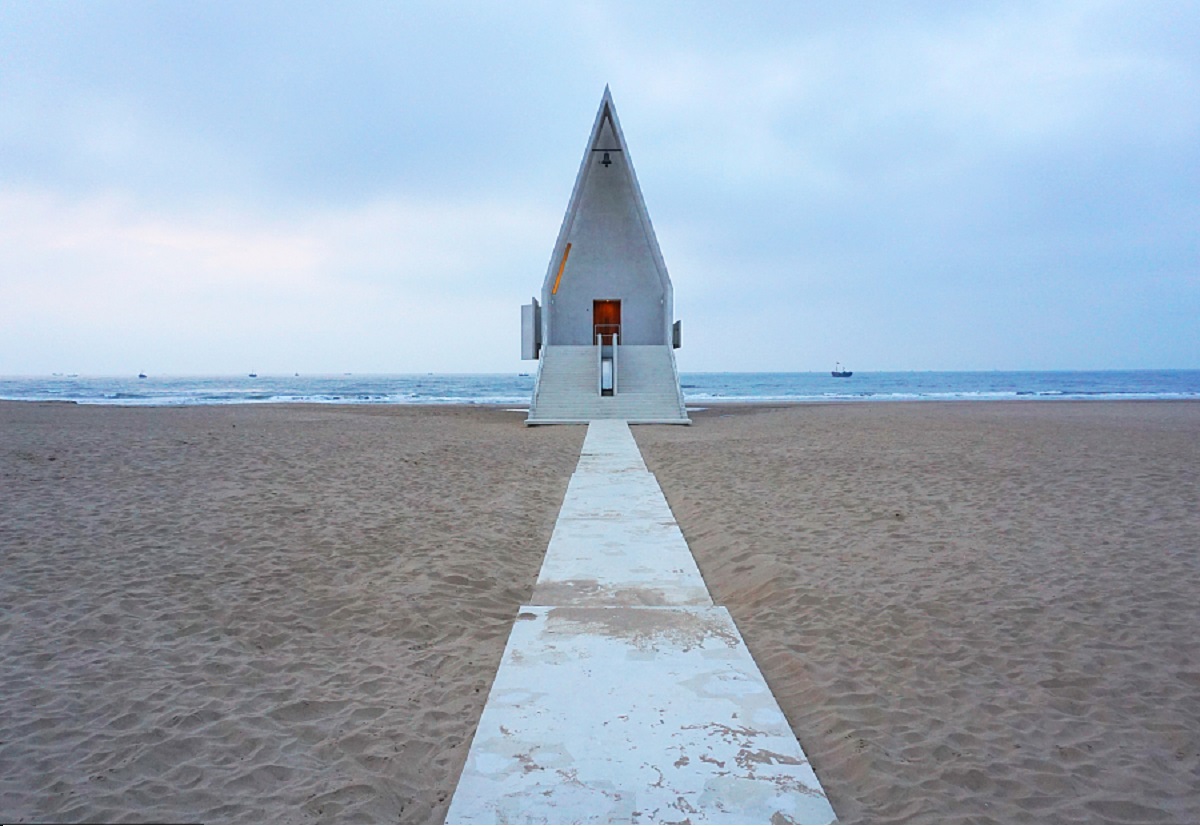
Aranya Hall, designed with minimalist aesthetics and rich spiritual symbolism, has become one of China’s most photographed and discussed architectural landmarks, located in the coastal community of Aranya in Hebei Province. Since its debut, it has gained widespread popularity on social media and inspired cultural admiration for its serene beachfront presence.
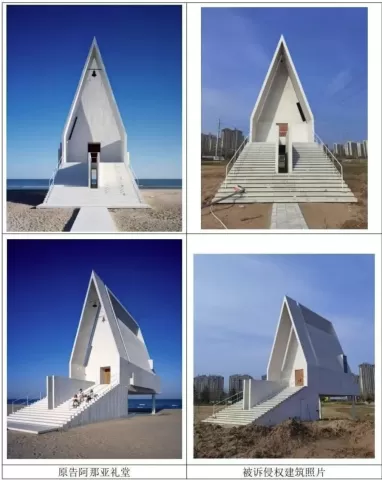
In 2024, Aranya Holdings discovered that a real estate company, Henan Jingkaili Real Estate Co., Ltd., had constructed a nearly identical chapel-like structure in a commercial district in Xinxiang, Henan Province. The lookalike drew attention on platforms such as Xiaohongshu (Red Note, China’s Instagram-equivalent), where users posted photos of what many assumed was a new Aranya location. Aranya filed suit, alleging copyright infringement of its architectural work.
Court's Decision: Not Just Cease-and-Desist, But Demolition
The intermediate and high courts of Henan sided with Aranya and ordered the infringing building to be torn down within one month of the judgment taking effect. The court reasoned that:
The defendant’s alleged “remodeling” of the structure (such as adding glass panels) was superficial and failed to address the core issue of substantial similarity in the building’s form and layout.
The defendant had proceeded with modifications without Aranya’s consent, despite ongoing litigation and previous court warnings.
Continued possession of the infringing structure, even with minor cosmetic changes, would constitute ongoing infringement and diminish the plaintiff’s exclusive rights.
The court balanced remediation cost vs. legal deterrence, noting that the building had no practical use, cost only RMB 60,000 (approx. USD 8,300) to construct, and the developer had already admitted it spent just RMB 20,000 on adjustments. The low cost of removal and lack of good-faith efforts made demolition a proportionate and necessary remedy.
Why This Case Matters
1. Breakthrough in Architectural Copyright Enforcement
Although architectural works have been protected under China’s Copyright Law since 2010, actual enforcement, especially against physical buildings, has been rare. This ruling marks a judicial milestone by affirming that:
- Buildings themselves are protectable as works of authorship.
- Reproducing the shape, layout, and artistic expression of an iconic structure constitutes infringement, even if the copy is built in a different location or for a different purpose.
2. Demolition as a Remedy Sets a Strong Deterrent
In most IP cases, remedies are limited to injunctions, damage awards, or removal of infringing materials. Ordering the physical demolition of an entire building sends a powerful message: architectural works are not free inspiration and infringers cannot “build now, settle later.”
This decision may reshape how developers approach reference designs, especially when dealing with high-profile or signature architectural works. It also strengthens the position of architectural designers seeking to protect their work in a fast-developing built environment.
3. Consistency with International Trends
Globally, architectural copyright enforcement remains a complex issue. In the U.S. and EU, courts have upheld copyright in building designs, but remedial actions rarely involve demolition. China’s approach here is not just compliant with international principles, but also more assertive, aligning with the country's broader commitment to strengthening IP protection as part of economic and cultural development.
4. Social Media as Evidence and Infringement Amplifier
Interestingly, the case also reflects the role of social media platforms like Xiaohongshu and Douyin (TikTok) as both evidence repositories and channels that exacerbate reputational harm. The public posting of the infringing site contributed to public confusion and market dilution of Aranya’s cultural brand, an increasingly important factor in IP disputes involving architecture, fashion, and design.
Implications for Developers, Architects, and Rights Holders
- For developers: Originality and licensing matter. Reference designs should not be used without express permission, especially when the original work enjoys public recognition.
- For architects: This case supports more aggressive assertion of rights. Registration and enforcement of architectural works are both possible and increasingly respected by Chinese courts.
- For rights holders: Strategic litigation, especially when tied to reputational assets, can achieve powerful results. Aranya’s willingness to litigate sends a message to copycats across all creative sectors.
Key Takeaways
- Copying a well-known building design, especially one with cultural or commercial influence, can now lead to court-ordered demolition in China.
- Good-faith engagement with original creators, or licensing, is essential.
- China’s courts are willing to apply IP laws with teeth, even in construction and real estate, industries traditionally seen as hard to regulate with copyright.
This case is a powerful precedent showing that in China, architectural creativity is no longer up for grabs. As the country strengthens its IP regime, particularly in cultural and creative sectors, rights holders have more tools to protect what they build, both on paper and in the real world.