
by Skye Zou
In a recent judgment by the Baiyun District People's Court of Guangzhou, multinational consumer goods giant Procter & Gamble (P&G) secured a significant victory in a trademark infringement and unfair competition case against Guangzhou Longqi'er Cosmetics Co., Ltd. and an individual, Mr. Wu.
The case illustrates not only the growing judicial intolerance for "brand squatting" and "free-riding" tactics, but also the increasing willingness of Chinese courts to award punitive damages in cases involving deliberate and egregious infringement.
Case Overview: When “Panpiao” Meets “Pantene”
P&G alleged that the defendants had intentionally disassembled and recombined well-known trademarks such as Pantene (潘婷, PānTíng), Rejoice (飘柔, PiáoRóu), Head & Shoulders (海飞丝, HǎiFēiSī), and Safeguard (舒肤佳, ShūFūJiā) into lookalike marks like “潘飘” (Pānpiāo), “潘飘飞丝” (PānPiāoFēiSī) and “肤仕佳” (FūShìJiā).
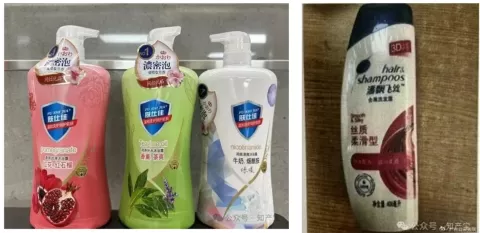
But the similarities didn’t stop at names. The defendants also marketed products with packaging designs and layouts highly similar to P&G’s well-known branding, including shield-like emblems and font arrangements, further confusing consumers and attempting to ride on P&G’s brand equity.
Court’s Ruling: Malicious Infringement-Punitive Damages of ¥1.5 million
The court found that the disputed trademarks:
Incorporated visually and phonetically similar elements of registered P&G trademarks.
Were used on products with packaging that mimicked P&G's designs, including color schemes, iconography, and layout.
Created a high risk of confusion among consumers.
The judge emphasized that these acts demonstrated clear subjective bad faith, with an obvious intent to “free ride” on the reputation of P&G’s established brands. The court awarded:
¥1.5 million in damages (including legal costs),
An injunction against further production and sales,
And formally recognized the case as meeting the threshold for punitive damages, citing “subjective malice” and “serious consequences”.
Legal Significance: When Free-Riding Becomes Costly
This case reinforces several key points in China's IP enforcement landscape:
1. Combination Imitation = Infringement
Even if individual letters or characters differ slightly from the original trademark, combined visual or phonetic mimicry, especially alongside similar packaging, can still amount to infringement and unfair competition.
2. Packaging Imitation is Not Immune
Beyond trademarks, product packaging and trade dress are protected under China’s Anti-Unfair Competition Law when they are distinctive and widely recognized. P&G’s long-term use and marketing were key to proving this.
3. Punitive Damages are Real and Growing
Once rare, punitive damages are becoming more common in Chinese IP judgments, particularly where infringers show deliberate malice and cause market confusion. Courts are now willing to penalize infringers not just to compensate but to deter future misconduct.
What Is Combination Imitation in Trademark Law?
Combination imitation refers to a strategy where infringers take parts of different famous trademarks (like words, syllables, or design elements) and recombine them into a new mark that looks or sounds confusingly similar to the originals, even if the exact trademark is not copied word-for-word.
In the P&G vs. Longqi'er case, the defendants didn’t directly copy trademarks like “Pantene” (潘婷, PānTíng) or “Head & Shoulders” (海飞丝, HǎiFēiSī). Instead, they:
Split parts of famous trademarks (e.g., “潘” (Pān) from “潘婷” (PānTíng), “飘” (Piāo) from “飘柔” PiáoRóu),
Recombined them into new names like “潘飘” (PānPiāo) or “潘飘飞丝” (PānPiāoFēiSī),
Mimicked the look and feel of P&G’s packaging and logos.
This combination creates a visual and phonetic similarity that misleads consumers into thinking that the infringing products are related to the genuine brand, even though no single trademark has been exactly copied.
Why Is Combination Imitation Illegal?
Courts recognize that even partial imitation can:
Confuse consumers about the source of the goods,
Damage the reputation of established brands,
Create unfair competition by exploiting another company’s investment in brand building.
Thus, combining parts of famous trademarks to create new but deceptively similar marks is considered trademark infringement and unfair competition under Chinese law (and under international standards).
The Baiyun District Court ruled that even though the defendants didn’t copy the trademarks exactly, the overall impression created by their new brands and packaging was confusingly similar to P&G’s well-known products.
Key Legal Standard: “Overall Impression” Test
Chinese courts (and many others worldwide) use a “holistic” or “overall impression” approach: They don't look only at specific letters or colors, they analyze the overall visual, phonetic, and conceptual similarity between the two brands/products. If ordinary consumers could reasonably be confused, infringement is found.
Final Thoughts
As China continues to strengthen its intellectual property framework, this case demonstrates how courts are aligning with global standards in assessing bad faith behavior, supporting brand owners, and promoting fair competition. It is a welcome development for companies committed to innovation and authenticity, and a wake-up call for those who aren’t.
This ruling provides critical reassurance to both foreign and domestic rights holders that:
China is taking IP enforcement more seriously;
Blatant “brand impersonation” will not be tolerated, even if done through seemingly minor adjustments;
Proactive legal strategies, backed by strong evidence of market visibility and confusion, can lead to substantial remedies.
For businesses operating in China’s crowded and competitive markets, protecting brand integrity is not optional: it is a legal and strategic imperative. This decision also serves as a clear deterrent to infringers: mimicry and misleading branding can (and will) be punished.
Cover photo by Lewis Fagg on Unsplash