
By Seven Liu
Shenzhen’s Futian District People’s Court has ordered Hangzhou Reliu Brand Operation Management Co., Ltd. to pay over 5 million yuan (approx. USD 690,000) in damages to Luckin Coffee for trademark infringement.
This case offers valuable lessons on how Chinese courts assess willfulness, confusion, and punitive damages in trademark disputes, especially where the infringer mimics an established and widely recognized brand.
The Dispute: When “Lucky Cat” Chased Luckin’s Brand Equity
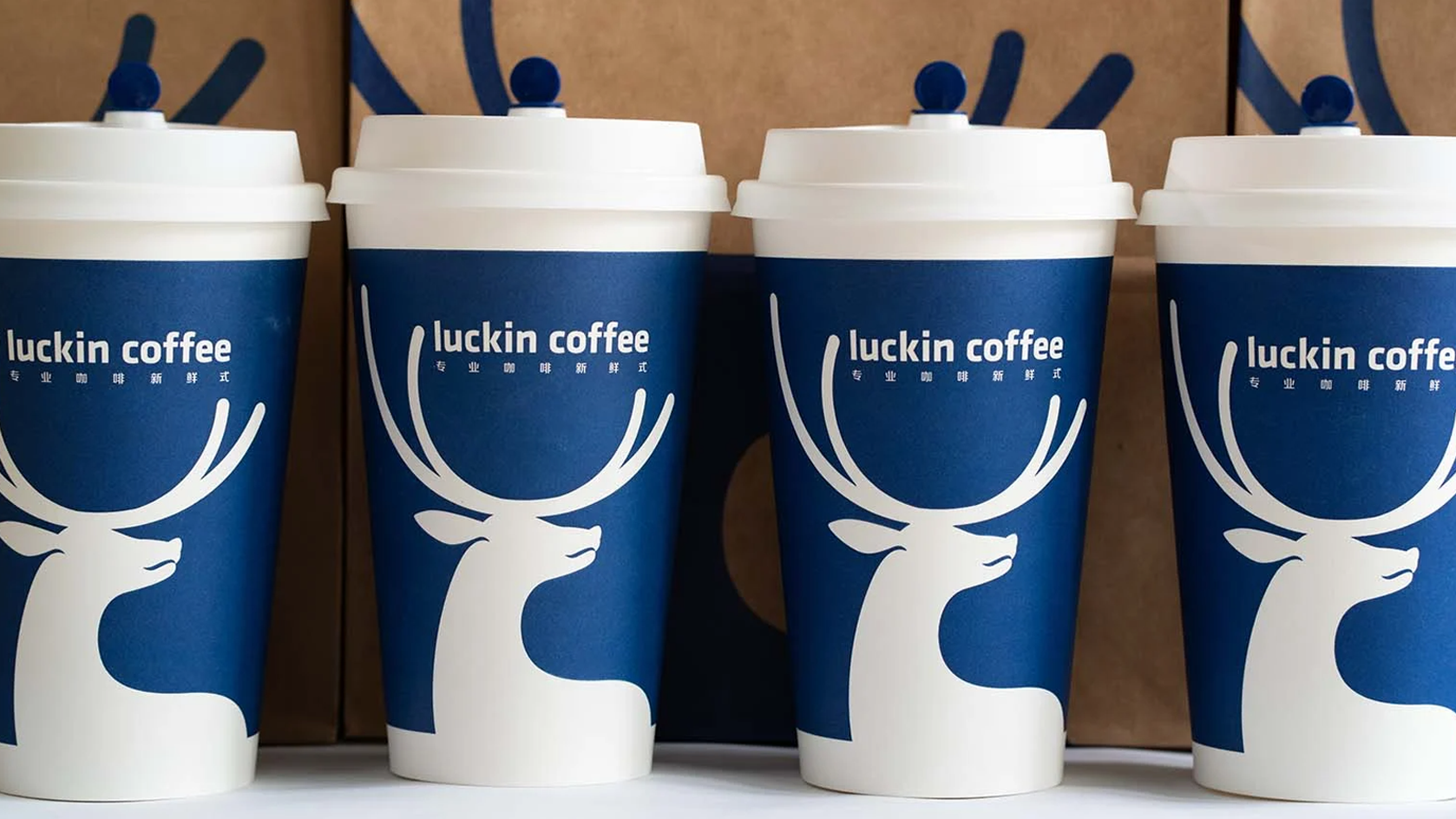
Luckin Coffee, one of China’s most visible and fast-growing coffee chains, alleged that Hangzhou Reliu Company’s “LUCKY CAT COFFEE” (幸猫咖啡) brand had deliberately modeled itself on Luckin’s visual identity to benefit from the latter’s brand goodwill. The accusations focused on the highly similar logos, store signage, packaging, and employee uniforms used by Lucky Cat Coffee across its 80+ franchise outlets nationwide.

The infringement was not subtle. Both the English and Chinese names evoked a similar linguistic structure, and the brand visuals created a strong visual echo of Luckin’s iconic deer-head logo and minimalistic design, choices which the court found went beyond coincidence.
Court’s Reasoning: Similarity + Intent = Infringement
In its ruling, the Futian District People’s Court held that the disputed trademarks shared substantial visual, phonetic, and conceptual similarities that were likely to cause consumer confusion, particularly given Luckin Coffee’s nationwide presence and high market visibility.
Importantly, the court did not just focus on the marks themselves, but considered the full scope of use: from shopfronts to takeaway cups, uniforms, and marketing materials. The comprehensive imitation, coupled with evidence that the infringing party collected significant franchise fees, supported a finding of malicious intent.
Key Takeaways from the Judgment
1. Punitive Damages Applied for Willful Infringement
While Luckin sought 5 million yuan in compensation, the court didn’t just accept the number: it calculated base damages from known franchise revenue and applied a double multiplier, citing the defendant’s refusal to cooperate with financial disclosure during the proceedings.
This is a clear sign that Chinese courts are ready to apply punitive damages under the Trademark Law when plaintiffs show willful infringement and obstruction of the litigation process.
2. Reputation and Market Penetration Matter
Luckin’s scale (over 24,000 stores as of Q1 2025) and brand recognition were central to the court’s assessment. The greater the plaintiff’s visibility, the more serious the risk of consumer confusion, and the harsher the penalties for infringers who try to capitalize on that recognition.
3. Judgment Enforcement Is Still an Ongoing Battle
Though the ruling became legally binding in December 2024, Hangzhou Reliu Company failed to comply with the court order, leading Luckin Coffee to initiate compulsory enforcement. This reflects a broader challenge in IP litigation: winning the case is one step, ensuring compliance is another.
What This Means for Brand Owners and Market Entrants
This case reaffirms China’s evolving commitment to fair competition, brand authenticity, and credible IP enforcement, especially for companies with large consumer footprints or international exposure.
For businesses operating in or entering the Chinese market:
- Monitor and enforce actively: Even when infringement seems “local” or small-scale, courts are increasingly open to recognizing systemic imitation and awarding meaningful compensation.
- Document brand reputation and market presence: These factors strengthen your position in infringement cases and support claims for punitive damages.
- Don’t underestimate franchise-style infringement: A network of copycat stores is harder to manage but also easier to demonstrate bad faith when the imitation is organized and monetized.
Conclusion: A Win for IP Integrity
The Luckin v. Lucky Cat Coffee case stands as a robust precedent for future trademark disputes in China. It sends a strong message that IP enforcement is not just theoretical. With courts now embracing commercial context, visual impression, and punitive frameworks, rights holders have a clearer path to assert and protect their brands against deliberate free-riding.
If your business is facing trademark infringement in China or looking to establish a defensible IP strategy, Allasya Law & IP offers international-caliber legal support for risk analysis, enforcement, and cross-border protection.