
by Xiaoxue Xiang
With the widespread use of AI tools, it has become increasingly common to generate high-quality images simply by entering a few lines of descriptive text. This practice, however, raises a practical legal question: if others use identical or similar prompts to produce comparable works, could this constitute infringement?
A recent judgment by the Shanghai Huangpu District People’s Court provides useful guidance on this issue.
Case Background: A Dispute Triggered by Prompts
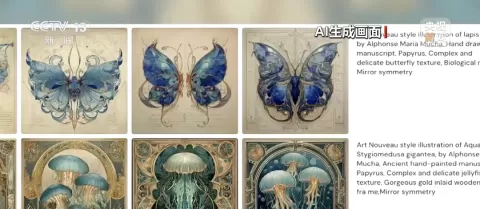
A cultural company in Shanghai used an AI model to generate stylized images. To ensure consistency in output, the company developed a set of prompts covering artistic styles, visual subjects, and technical details.
The generated images were then published on online platforms.
The company later discovered that two individuals had used similar prompts to create visually comparable works, which were included in an art catalog. The company filed a lawsuit, arguing that these prompts were the result of intellectual effort, incorporating creative ideas and aesthetic choices, and should therefore be protected as copyrighted works.
The defendants, however, contended that prompts are merely operational instructions for AI systems (combinations of commonly used words) and do not meet the threshold for copyright protection.
The Court’s Reasoning
The court ultimately held that the prompts in question do not qualify as works under copyright law, based on several considerations:
Nature of the Content:
The prompts primarily reflected ideas about desired visual outcomes rather than constituting independent and complete artistic expressions. Their function was to guide the AI system, making them closer to instructions than creative works.
Form of Expression:
The prompts largely consisted of functional combinations of existing vocabulary, without sufficient creative transformation. Simple listings or arrangements of common terms generally do not meet the originality threshold required for copyright protection.
Degree of Individuality:
Copyrightable works typically exhibit a certain level of personal creative input. In this case, the stylistic descriptions and technical details used in the prompts were common within the industry and lacked distinctive personal expression.
Taking these factors together, the court concluded that the prompts remained at the level of ideas rather than protected expressions.
Policy Considerations Behind the Decision
The court also considered the broader impact of its ruling.
Granting copyright protection to ordinary keyword combinations could restrict the public’s ability to use language and AI tools freely. Such an outcome would run counter to the fundamental purpose of copyright law: to encourage creativity while facilitating the dissemination of knowledge.
Faced with emerging technologies, courts tend to define the scope of protection cautiously to avoid disrupting normal industry practices.
Legal Challenges Brought by New Technologies
The widespread adoption of AI has created categories of content that are difficult to classify under traditional legal frameworks. Prompts exist somewhere between creative ideas, operational instructions, and input data, forms not originally contemplated by copyright law.
As a result, courts continue to rely on established legal principles to ensure consistency and predictability in legal application.