
By Linna Song
For many consumers, a product can become recognizable even without a logo. The shape of a bottle, the design of a chair, the appearance of a handbag, or the distinctive look of a pair of shoes can gradually become associated with a particular brand.
But when does a product design become legally protectable as a form of trade dress?
The courts' different approaches at first instance and on appeal offer useful guidance on how Chinese courts assess product shape, functionality, consumer recognition and evidence.
The dispute: can the appearance of a clog be protected?
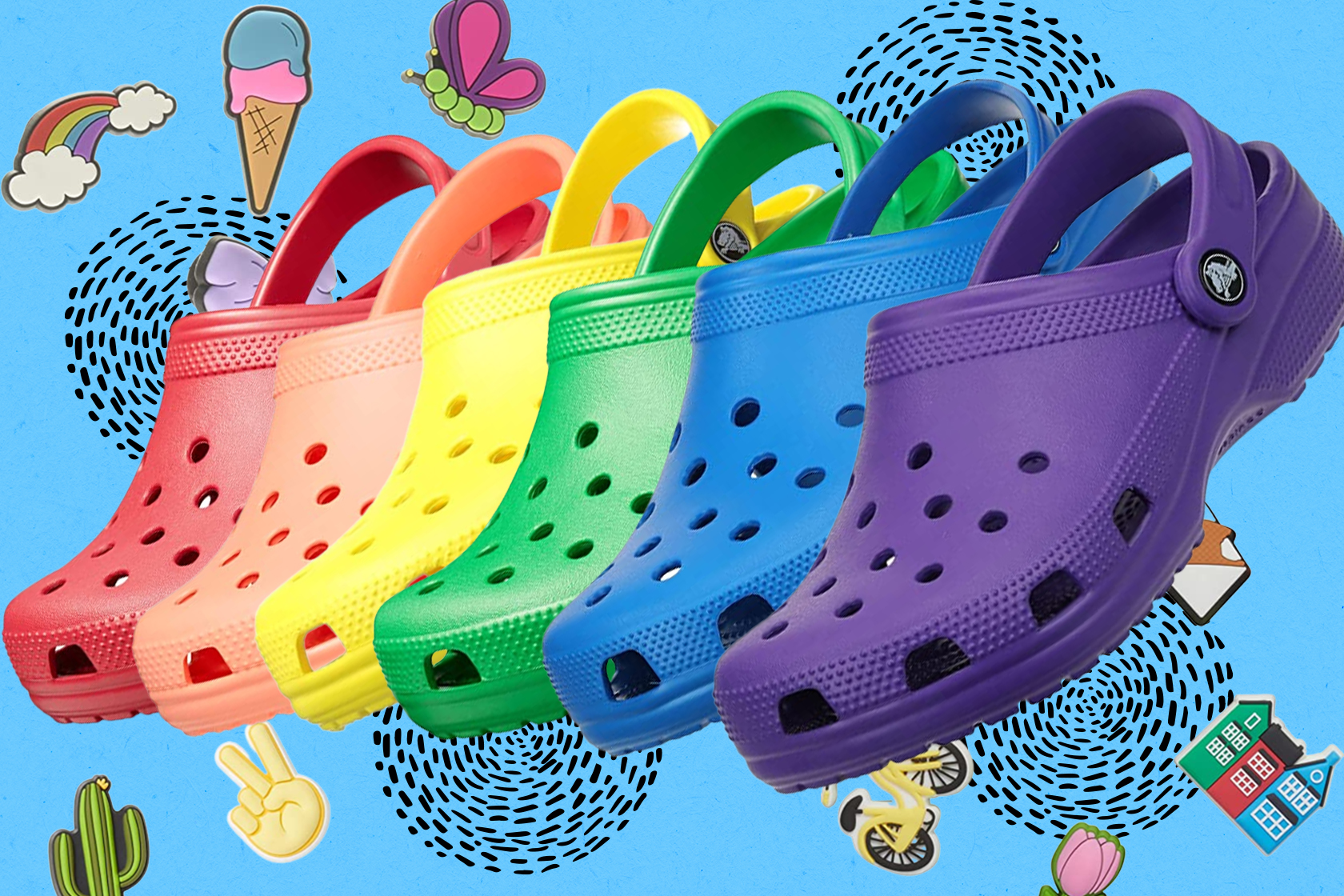
Crocs sought protection for the appearance of five of its clog models, including its classic and winter versions.
Rather than relying on the CROCS name or logo, Crocs focused on three common characteristics:
a wide, rounded toe;
- regularly distributed circular holes across the upper; and
a movable heel strap, attached to the shoe through a circular button.
Crocs applied to the CNIPA for a series of partial design patents.
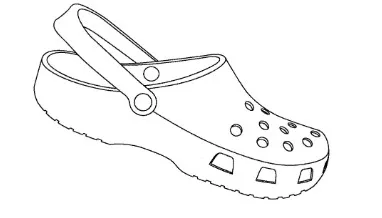
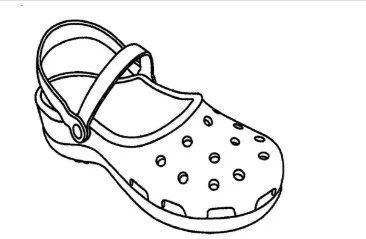
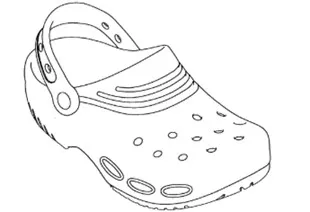
Crocs argued that 20 Hotwind products reproduced these characteristics and, in some cases, copied additional elements of individual Crocs models.
Hotwind disagreed.
Its main argument was that these characteristics were not sufficiently distinctive to identify the commercial origin of the shoes. Some, it argued, were also closely connected to the practical functions of a clog. The holes, for example, could provide ventilation and reduce weight, while the heel strap could help secure the shoe.
What does Chinese law protect?
Article 6 of China's Anti-Unfair Competition Law prohibits certain acts that can cause consumers to believe that a product comes from another business or has a particular commercial connection with it.
This protection extends to the unauthorized use of another party's product name, packaging or decoration that has “certain influence.”
The law also excludes certain types of design from protection, including shapes that arise from the inherent nature of the product or are necessary to achieve a technical effect.
This creates an important tension.
A successful product may become famous precisely because of its functional and practical design. Yet those same functional characteristics may be difficult to monopolize through unfair competition law.
The first-instance court sided with Crocs
The first-instance court found that Crocs' three characteristics, considered together, had acquired sufficient distinctiveness through long-term use.
The court noted that Crocs and its related companies had sold footwear in China for many years and had promoted the CROCS brand through various media and commercial channels.
The court considered the three characteristics as a combination rather than treating each one in isolation.
It concluded that the combination of the rounded toe, circular holes and movable heel strap had become sufficiently associated with Crocs products to qualify as a product decoration with certain influence under Article 6.
It also rejected Hotwind's argument that the three features were simply functional design elements.
The court did not support Crocs' claim for high compensation based on profits from infringement
Crocs sought RMB 15 million in compensation; the first-instance judgment awarded only 2.5 million RMB in damages.
Crocs relied on publicly available online sales data and estimated that the allegedly infringing products had generated at least RMB 95.83 million in sales when estimated offline sales were added to online sales.
It then applied an assumed 50% gross profit margin, producing an alleged infringement profit of approximately RMB 47.9 million.
The court was not persuaded.
It considered the calculation of total sales to be insufficiently reliable and found that applying a 50% gross margin lacked adequate evidentiary support.
More importantly, the court noted that the appearance of the product is only one factor contributing to its profitability.
The court ultimately awarded Crocs RMB 2.5 million, including reasonable enforcement expenses.
The second instance overturned the first instance's finding that infringement was established
The second-instance court took a more demanding approach.
It did not dispute that Crocs was a well-known international footwear brand.
This distinction became decisive.
Brand fame is not the same as design fame
Crocs submitted extensive evidence on appeal. The evidence included international three-dimensional trademark registrations, financial statements, advertising expenditure, store information, awards, media coverage, social media posts, consumer discussions and enforcement activities.
At first sight, this appeared to be a substantial body of evidence, but the court examined what each item actually proved.
Financial statements, for example, showed the company's overall revenue. They did not necessarily show how much consumers purchased the specific five clog designs.
The number of CROCS stores demonstrated the strength of the brand, but did not automatically demonstrate the market recognition of the particular product decoration.
Similarly, rankings of the CROCS brand on e-commerce platforms could not simply be treated as evidence of the popularity of the specific clog designs.
The timing of the evidence also mattered
The court assessed the situation as of April 2021, rather than looking simply at Crocs' current popularity.
Crocs' evidence did not, in the court's view, sufficiently demonstrate this. Some of its strongest promotional activities came after the relevant date.
The court also noted that Crocs itself had publicly acknowledged a period in which its popularity in China declined substantially. Media reports described the brand as having lost visibility among younger Chinese consumers before subsequently rebuilding its profile through collaborations with fashion brands.
This weakened the argument that the clog's appearance had continuously enjoyed strong source-identifying significance in China.
Functionality created another problem
The functionality issue was particularly interesting.
Crocs had itself promoted the practical advantages of its classic clog design. One of the company's executives was quoted describing the origins of the clog and explaining that the holes were intended to reduce weight and improve ventilation, while the heel strap helped secure the shoe.
The court considered this evidence relevant.
The problem is straightforward: if a feature exists because it performs a technical or practical function, competitors generally should remain free to use it.
In this case, Crocs' own marketing materials provided evidence that at least some of the disputed features had functional purposes.
That created a significant obstacle.
The case illustrates a difficult boundary
The Crocs dispute sits at the intersection of three different concepts:
Functionality: The holes and heel strap may help the shoe perform its intended function.
Aesthetic design: The combination of the rounded toe, holes and strap also contributes to the visual identity of the shoe.
Brand identity: After years of commercial use, consumers may associate the overall appearance with Crocs.
These concepts can coexist. The fact that a design is functional does not automatically mean that consumers cannot recognize it as belonging to a particular brand.
But when a company seeks exclusive legal protection over the appearance itself, the evidence must show more than commercial success.
It must show that the design has actually become a source identifier.
What about the many other clog shoes on the market?
Hotwind also presented evidence of similar products sold in China and abroad, including various patents and examples of other brands using similar designs.
The more common a particular design becomes in the market, the harder it may be to establish that the design itself identifies a single commercial source.
A warning about enforcement evidence
Crocs also submitted extensive evidence of enforcement activities, including online takedowns, administrative actions, customs enforcement and litigation.
Such evidence can be valuable, but the court distinguished between different types of enforcement: Some actions concerned CROCS trademarks, while others took place after April 2021.
The court did not consider trademark enforcement history to be equivalent to evidence that the product appearance itself had acquired distinctiveness.
Companies seeking broader protection should therefore build evidence specifically around the design they want to protect.
What does the decision mean for international brands?
The Crocs case should not be understood as saying that product shapes can never be protected as trade dress in China: Instead, it demonstrates how demanding the evidentiary exercise can be.
For a product shape to receive protection, a brand may need to demonstrate:
1. Long-term and substantial use in China
2. Specific sales data for the relevant product or design
3. Advertising that actually shows and promotes the protected appearance
4. Consumer recognition of the appearance itself
5. Evidence that consumers associate the appearance with one commercial source
6. A design that is not merely dictated by technical function
7. Evidence existing at the time the alleged infringement occurred
This has a practical consequence for brand owners.
If a company believes that the appearance of a product may eventually become an important part of its brand identity, it should start documenting that connection early.
Advertising should clearly associate the product design with the brand. Product-level sales data should be preserved. Consumer recognition should be monitored. Enforcement actions involving the design should be documented separately from ordinary trademark enforcement.
In other words, do not wait until litigation begins to start collecting evidence of distinctiveness.
What about the “legal source” defence?
The case also contains an important lesson for retailers and fashion businesses.
Hotwind argued that some of the products had been legitimately purchased from suppliers and provided contracts, orders, invoices and payment records. The court nevertheless rejected the legal-source defence.
The reason was that the defence is principally available to a seller who can demonstrate that it obtained the goods from a legitimate source. It does not provide the same protection to a party that is itself treated as a producer.
Here, one of the Hotwind companies had commissioned third parties to manufacture the products, and the relevant documentation identified it as the producer.
The lesson is particularly relevant to retailers that operate private-label or commissioned products: “We bought it from a supplier” is not necessarily enough if the retailer was involved in bringing the allegedly infringing product into existence.
The bigger lesson: recognition is not enough
The Crocs case raises a question that extends far beyond footwear.
A product can be:
commercially successful;
widely recognized;
heavily advertised;
associated with a famous brand; and
instantly identifiable to consumers.
Yet none of these facts automatically means that its shape constitutes legally protected trade dress.
The decisive question is more specific: Does the appearance itself identify the commercial source of the product, and can the rights holder prove that this was already the case when the alleged infringement occurred?
The path from an iconic design to a legally protected trade dress is not automatic. It has to be built, demonstrated and, ultimately, proved.